殷(in)の時代の甲骨文字(Kôkotsumoji) Oracle bone script in the Yin Dynasty
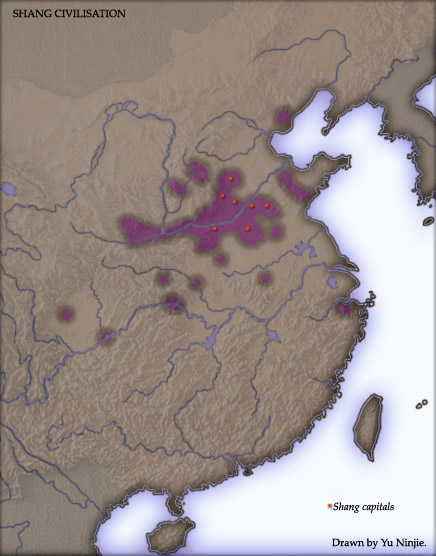 |
| Yin Dynasty |
 |
甲骨文字(Kôkotsumoji)
|
部首の起源について考えるなら、一番古い漢字の用例である甲骨文字(亀甲獣骨文字)を参考にして、学習するのがもっともである。
甲骨文字は、殷の王朝時代、紀元前1700年頃から1146年の間のものといわれている。
"甲骨文字 Oracle bone script" is the oldest form in the Kanji history. If you want to know the origin, it's better to refer "甲骨文字 Oracle bone script".
"甲骨文字 Oracle bone script" were used in the Yin Dynasty (about BC.1700 - 1146).
漢字は漢(kan)の時代に日本に入ってき始めた Kanji started coming to Japan in the Han Dynasty
漢とは、当時の中国の地を指す代名詞。
漢とは、水の流れていない川をあらわす形声文字でもある。
漢字が日本に入ってき始めたのはたのはこの時代。
Han Dynasty (BC.206 - 220), ancient Chinese culture is formed in this period.
Han is the name to call the land of China in that time.
Han is also 形声(Keisei)文字 sound agreement the river that has no water.
Kanji started coming to Japan in this period.
音読みが複数ある理由 Why so many different way to pronounce in ON-yomi?
A) 入ってきた時期が場所がその時代背景が違うから。
Because Kanji has been coming in different time and they are coming from different parts of China.
・呉音 (592-710年頃) … 呉音は仏教経典とともに伝わる。中国から日本へ。
・漢音 (710-800年頃) … 隋・唐の都、長安・洛陽の発音は漢音。江南から遠く離れた内陸の地で北京語と上海語が違うように発音は異なる。遣隋使は600-618年、

・宋音(唐音) (1185-1869年頃) … 鎌倉~江戸時代に、禅宗の留学僧や民間貿易の商人たちによってもたらされた。江戸時代は黄檗宗にもとづく。江南の発音。
・GO-on (592-710 aprox.) … Coming with Buddhism scriptures from Jiangnan.
・KAN-on (710-800 aprox.) … The pronunciation from Chang'an, Luoyang which is the capital of Sui・Tang. There is a large distance between Jiangnan and Chang'an. It is like today's Chinese and Mandarin Chinese. Kenzuishi is 600-618, Kentôshi is 630-894. Those are things what Japanese brought from China.
・Sô-on(Tô-on) (1185-1869 aprox.) … Those are brought by monks and private traders in the Kamakura and Edo period. Jiangnan's pronunciation.
Remember!! Kanji form has been changing till our generation over the time and places.
Quiz: Do you know how many pronunciation in Chinese Kanji?
